
Water Safety
Building a safer Yorkshire coast,
one swimmer at a time.
Yorkshire Lifeguard Academy is committed to improving water safety awareness across East and North Yorkshire's coastal communities — working with parents, schools, leisure centres and community partners.
Why it matters
Every year, people lose their lives
in and around preventable water incidents.
Drowning is one of the leading causes of accidental death in the UK. The vast majority of incidents are preventable with the right knowledge, habits and respect for the water. The Yorkshire coast is a spectacular and treasured place — but it demands respect. Cold water, powerful tides, rip currents and hidden hazards catch people out every single year.
Yorkshire Lifeguard Academy believes that water safety education saves lives. By working with communities, families, schools and leisure providers, we aim to build a coast where every person who enters the water — or stands near it — understands the risks and knows how to respond.
Cold Water
The North Sea is cold year-round — even in summer, sea temperatures rarely exceed 16°C. Cold water shock can cause involuntary gasping, cardiac arrest and sudden incapacitation within seconds of entering the water. Many swimmers underestimate this risk significantly.
Rip Currents
Rip currents are powerful, localised channels of water that flow quickly away from the shore. They are one of the biggest hazards on Yorkshire beaches and can carry even strong swimmers away from safety within moments. They are often invisible from the shoreline.
Tides & Surge
Yorkshire's tidal range is significant. Beaches that appear flat and accessible at low tide can become cut off within minutes as the tide turns. Wave surge around harbour walls, rock pools and groynes catches people off guard and can sweep them into the water instantly.
Hidden Harbour Depths
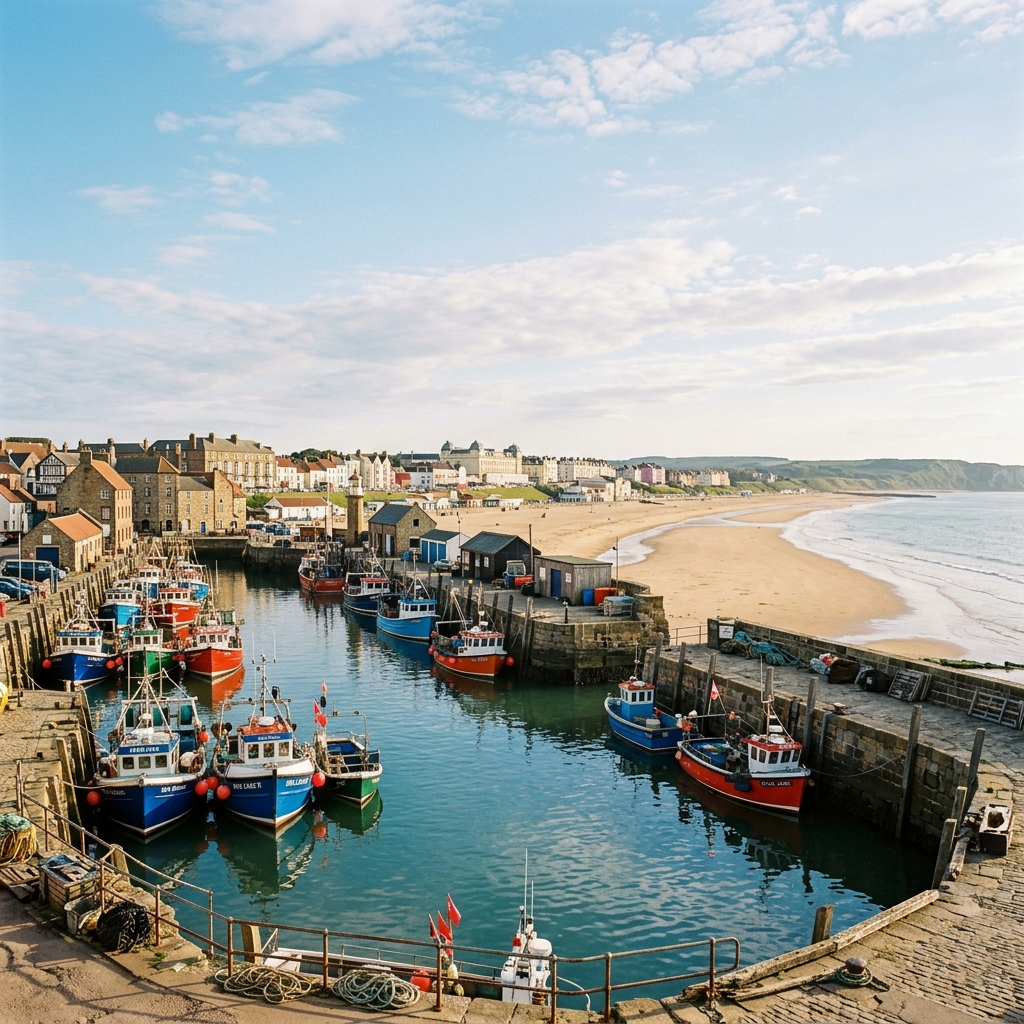
Harbours at Whitby, Scarborough and Bridlington can appear calm and inviting — but they are deep, cold, often filled with underwater obstructions, and have strong localised currents. Jumping into harbour water is extremely dangerous and has caused fatalities on the Yorkshire coast.
People accidental drown in the UK every year.
According to the National Water Safety Forum, over 400 people die from accidental drowning in the UK each year. Many more suffer serious injury. The majority of incidents occur in open water — including beaches, harbours, rivers and reservoirs. Education is the most powerful preventative tool we have.
For parents & guardians
What every parent should teach their children.
Children who grow up understanding water safety are far better equipped to make safe decisions at the coast, in pools and near rivers. These key messages are simple, memorable and potentially life-saving.

Talk to your children before you reach the beach.
Research shows that children who receive water safety briefings before visiting the coast are significantly more likely to behave safely and less likely to take unnecessary risks. Make water safety a normal part of your family conversation — not just something that happens in a classroom.
In an emergency
Call 999 → Coastguard
For incidents at sea or near the coast. The Coastguard co-ordinates rescue at sea 24 hours a day.
Enrol in our Rookie Lifeguard programme
Give your child the water safety skills to last a lifetime — from age 8 onwards.
Schools & Youth Groups
We come to your school. Your students come to us.
Yorkshire Lifeguard Academy partners with schools, youth groups, Scouts, Guides and leisure centres across East and North Yorkshire to deliver high-quality water safety education and structured lifeguarding programmes.
Water Safety Talks
Engaging, age-appropriate water safety presentations delivered in school by trained Academy coaches. Covering coastal risks, float to live, beach flags, cold water shock and emergency action. Available for KS2 and KS3 year groups.
Rookie Lifeguard Visits
Bring groups of young people to take part in taster Rookie Lifeguard sessions at our partner leisure centre pools. An excellent activity for school trips, youth groups or curriculum enrichment days — building water confidence and safety skills together.
Coastal Safety Days
Curriculum-linked day visits to the Yorkshire coast combining hands-on beach safety learning, awareness of coastal hazards, RNLI resources and practical activities. Suitable for upper primary and secondary school groups. Delivered at Whitby, Scarborough or Bridlington.
Curriculum Links
Our sessions can be mapped to PE, PSHE and science curriculum frameworks. Water safety sits naturally within health and wellbeing, outdoor education and science (forces, physical geography). We can provide scheme of work materials on request.
RNLI Resources
As advocates of the RNLI's Sea Smart and Respect the Water campaigns, we can signpost schools to excellent free RNLI educational resources and arrange RNLI speaker visits where possible. We work alongside — not in place of — the incredible work of the RNLI.
Lifeguard Pathway for Schools
For secondary schools looking to offer something extraordinary — a sustained Rookie or Academy Lifeguard partnership giving eligible pupils access to structured lifesaving training throughout the academic year, contributing to Duke of Edinburgh and sports leadership awards.
Why partner with us
More than a one-off assembly.
Water safety education is most effective when it's repeated, practical and contextualised for the real environment children live near. Yorkshire Lifeguard Academy is rooted in this coast — we understand Whitby's tides, Scarborough's surf and Bridlington's harbour because we train here week in, week out.
Our partnership model is flexible, affordable and built around the needs of your school or organisation. Whether you want a one-off classroom talk or a sustained year-long programme, we'll work with you to make it happen.
Beach Safety Flags
Know your flags.
They could save your life.
Beach safety flags are a standardised communication system used by lifeguards and beach managers across the UK. Understanding them — and following them — is one of the simplest, most important things you can do at the coast.
Red & Yellow Flag
This is the lifeguarded swimming area — the safest place to swim on the beach. Lifeguards are patrolling and watching the water. Always swim between these two flags and stay within sight of the lifeguard station. On Yorkshire's busy beaches, this is where you should be.
Black & White Chequered Flag
This area is designated for surfboards, bodyboards, paddleboards and other non-motorised craft. Swimmers should not enter this zone — a collision with a board moving at speed can cause serious injury. Surfers must stay out of the red and yellow flag areas.
Orange Windsock
An orange windsock flying from a pole indicates that offshore winds are strong — conditions that can rapidly carry inflatable airbeds, rings and bodyboards out to sea. Never use inflatables when the orange windsock is flying. Conditions may look calm from shore but change quickly offshore.
Red Flag
A single red flag means conditions are dangerous. No one should enter the water when the red flag is flying — not even confident swimmers or experienced surfers. Conditions can include powerful surf, strong rip currents, storm surge or other hazards assessed as life-threatening by the lifeguard team.
The Essentials
10 rules every person near water should know.
Simple, memorable and potentially life-saving. These ten rules apply whether you're at the coast, beside a river or at an open water swimming venue.
Float to Live
If you fall into cold water, fight your instinct to swim. Float on your back, control your breathing, then call for help.
Never Swim Alone
Always have someone with you — ideally on a lifeguarded beach. Lone swimmers have no one to raise the alarm if they get into trouble.
Respect Cold Water
Even in summer, the North Sea is dangerously cold. Enter gradually, never dive in, and expect cold water shock if you fall in suddenly.
Know the Flags
Swim between the red and yellow flags. Never enter when the red flag is flying. Respect the black and white zone — it's for boards, not bodies.
Call 999 → Coastguard
For any water emergency at the coast, call 999 and ask for the Coastguard. Do this first — before attempting any rescue yourself.
Know the Tides
Check tide times before visiting the coast. Beaches and causeways that look accessible can become cut off within minutes as the tide turns.
Don't Jump into Harbours
Harbour water is cold, deep and full of hidden hazards. Jumping in — even for a thrill — has killed people on the Yorkshire coast. Don't do it.
Throw, Don't Go
If someone is in difficulty, do not jump in after them — you may become a casualty too. Throw something that floats and shout for help.
Watch the Wind
Offshore winds carry inflatables out to sea incredibly quickly. If the orange windsock is flying, put inflatables away. Even calm-looking days can have strong offshore winds.
Supervise Children Constantly
Children should be within arm's reach in or near water, and always within sight at the beach. Drowning is silent and fast — it doesn't look like it does in the movies.
Cold Water Shock
It happens in seconds. Most people don't expect it.
Cold water shock is a physiological response that occurs when the body is suddenly immersed in cold water — typically below 15°C. It is one of the leading causes of drowning in open water in the UK, and it is entirely independent of how good a swimmer someone is.
The North Sea along the Yorkshire coast rarely exceeds 16°C in summer. In spring and autumn, temperatures drop to between 7°C and 12°C. Even on a warm sunny day in July, the sea is cold enough to trigger a serious cold water shock response in most people.
What happens to your body
Involuntary gasping & hyperventilation (0–3 seconds)
The shock of cold water causes sudden, uncontrolled gasping and rapid breathing. If your head is underwater at this moment, you can inhale water and drown immediately. This is why you should never dive headfirst into cold open water.
Swimming failure (3–30 minutes)
As cold water cools your muscles, your ability to swim diminishes rapidly — even if you feel mentally alert. Swimming capacity can be severely impaired within 10 minutes, and most people can't coordinate swimming strokes within 30 minutes.
Hypothermia (30 minutes+)
Deep body temperature begins to fall, affecting consciousness, reasoning and physical control. This is when hypothermia becomes a serious risk. Without rescue or an exit from the water, hypothermia can be fatal.
The survival response: FLOAT
If you fall into cold water unexpectedly, your single most important action is to float. Lie back, spread your limbs, tilt your head back. Do not fight the water. Do not try to swim immediately. Control your breathing first, then decide whether to signal for help or slowly make your way to safety.
The North Sea — year-round
The average sea temperature along the Yorkshire coast ranges from approximately 8°C in winter to 16°C at peak summer. That's cold enough to trigger cold water shock at any time of year.
🎓 Our training includes cold water awareness
Every Yorkshire Lifeguard Academy programme covers cold water shock as a core component. Our Academy Lifeguard and Beach Lifesaving candidates receive specific cold water entry and management training to prepare them for the realities of the Yorkshire coast.
Academy Lifeguard ProgrammeGet in touch
Bring water safety to your
school or organisation.
Whether you're a primary school wanting a single classroom water safety talk, a leisure centre exploring partnership opportunities, or a youth organisation looking for an extended Rookie Lifeguard programme — we'd love to hear from you.
Schools & Academies
In-school talks, coastal safety days, and curriculum-linked lifeguard partnerships
Leisure Centres & Pools
Pool-based water safety sessions, Rookie Lifeguard hosting and joint training days
Youth Groups & Scouts
Water safety activities, badge work, coastal visits and Rookie Lifeguard taster sessions
Community & Council Partners
Community events, coastal safety campaigns and public water safety engagement
Contact
hello@yorkshirelifeguards.co.uk
We aim to respond to all partnership enquiries within two working days.