Paediatric First Aid training
Bluewatch Training · RLSS UK · 2 Days

Paediatric First Aid
(PFA).

Two days. Level 3. Full Paediatric First Aid for people who work with, supervise or care for infants and children. This course is designed to support EYFS and Ofsted-registered childcare arrangements where a full PFA certificate is required, and is suitable for staff and organisations with responsibility for children’s safety.

RLSS UK · Level 3
Ofqual Regulated
Designed to support EYFS / Ofsted PFA arrangements
2 Days · Valid 3 Years
About this course

First aid built around children and infants — because their needs are different.

Paediatric First Aid (PFA) is a two-day RLSS UK Level 3 qualification covering a comprehensive range of first aid skills specifically for children and infants. The first aid needs of children and babies differ significantly from those of adults — and this course ensures that anyone responsible for their care is trained appropriately.

The course is for anyone aged 16 or over who works with or has responsibility for infants and children. RLSS UK’s PFA course is designed to support EYFS and Ofsted-registered childcare requirements where a full Paediatric First Aid certificate is required. Early years providers should ensure their first aid arrangements meet the current EYFS framework and their setting’s statutory requirements.

On completion, candidates receive an Ofqual-regulated Level 3 Paediatric First Aid qualification designed to support EYFS and Ofsted-registered childcare requirements where a full PFA certificate is needed. Delivered by suitably qualified Bluewatch Training instructors at your setting across Yorkshire and the East Riding.

Course overview

Duration

2 days — normally 12 hours of course content, delivered over two full days, split sessions over a permitted period, or blended learning where available and clearly specified

Qualification

Level 3 Paediatric First Aid (RLSS UK)

Regulation

Ofqual regulated; designed to support EYFS / Ofsted paediatric first aid arrangements where full PFA is required.

Validity

3 years from assessment. Renewal required before expiry where the certificate is being used to support EYFS / Ofsted paediatric first aid arrangements.

Delivery

At your setting or an agreed Bluewatch Training venue.

Minimum age

16 years old at time of assessment.

Enquire about this course
What you learn

Course content

PFA covers the full range of paediatric first aid scenarios — from cardiac arrest to common childhood injuries and medical emergencies.

Paediatric CPR & AED

CPR for infants and children — compression ratios, rescue breaths and AED use in paediatric cardiac arrest.

Choking in Infants & Children

Age-appropriate choking management — back blows, chest thrusts for infants, and the progression of treatment in a paediatric choking emergency.

Unresponsive Child or Infant

Assessment of an unresponsive child or infant, the paediatric recovery position and monitoring until emergency services arrive.

Febrile Convulsions & Seizures

Recognition and management of febrile convulsions and epileptic seizures in children — a common paediatric emergency in childcare settings.

Anaphylaxis in Children

Recognition of anaphylaxis in infants and children, administration of adrenaline auto-injectors and emergency response procedures.

Burns, Wounds & Bleeding

First aid for burns, scalds, wounds and bleeding in infants and children — including considerations specific to paediatric patients.

Head Injuries

Recognition of head injuries in children, red flag symptoms and when to escalate to emergency services — including concussion guidance.

Croup & Breathing Difficulties

First aid for respiratory distress in children including asthma attacks, croup and other breathing difficulties common in young children.

EYFS and childcare settings

What EYFS requires for paediatric first aid.

EYFS guidance requires at least one person with a current full Paediatric First Aid certificate to be on the premises and available at all times when children are present, and to accompany children on outings. The certificate must be for a full course consistent with EYFS Annex A requirements.

Providers should also consider staff numbers, layout of premises, child age groups, outings, mealtimes, shift patterns, staff deployment and how quickly a paediatric first aider can respond in an emergency when deciding how many staff need PFA training. Early years providers remain responsible for ensuring their first aid arrangements comply with their current statutory obligations.

Discuss PFA for your setting
PFA or EPFA?

Full PFA is the safer default for EYFS providers.

Full PFA is usually the safer default for EYFS providers, nurseries, childminders and settings that need to meet full paediatric first aid requirements, including on-premises and outings obligations. EPFA may be suitable for some roles or support staff, but settings should check their statutory requirements, staffing ratios, insurance, internal policies and first aid arrangements before choosing.

Bluewatch Training can help explain the difference between PFA and EPFA, but each provider remains responsible for ensuring its first aid provision meets its statutory, regulatory and organisational obligations.

View Emergency Paediatric First Aid →
Who it's for

Suitable for registered childcare, early years and other settings working with children

Nurseries & Early Years Settings

EYFS-registered childcare settings are required to have at least one person with a current full PFA certificate on the premises and available at all times when children are present, and to accompany children on outings. On-site delivery available at your setting.

Childminders

Childminders registered with Ofsted and any assistant who might be in sole charge of children should hold a current Paediatric First Aid certificate. We can discuss delivery at a time and location to suit your arrangements.

Sports Clubs & Activity Providers

Coaches, sports club leaders and activity providers working with children can benefit significantly from Paediatric First Aid — going beyond general first aid to cover child-specific scenarios and emergencies.

Also available

Other paediatric first aid options

Emergency Paediatric First Aid (EPFA)

One-day course covering life-threatening paediatric emergencies. May be suitable for some roles and settings where an emergency paediatric first aid qualification is appropriate — settings should check their statutory requirements before booking.

View EPFA →

Combined PFA & FAW

Need both paediatric and workplace first aid? Our 3-day combined course awards both the PFA and First Aid at Work certificates — two qualifications, one course.

View Combined PFA & FAW →

Important for EYFS and childcare providers

Full Paediatric First Aid is usually the safer default for EYFS providers, nurseries, childminders and childcare settings where a full PFA certificate is required. EYFS providers must ensure their first aid arrangements meet the current statutory framework, including on-premises cover, outings, staff roles, ratios, layout of premises, renewal dates and internal policies.

Bluewatch Training can help you compare PFA and EPFA, but your setting remains responsible for deciding what training and first aid arrangements are required. PFA course delivery requires suitable space for practical first aid activity. For settings hosting training, Bluewatch Training can discuss venue requirements and access needs when enquiring.

PFA training supports staff first aid competence but does not replace safeguarding policies, medication policies, allergy management plans, accident reporting systems, emergency procedures, risk assessments, supervision arrangements or setting-specific responsibilities. Learners should contact Bluewatch Training in advance if they have accessibility needs, medical considerations or concerns about taking part in practical elements.

What happens on the course?

Practical, comprehensive and childcare-relevant.

The PFA course is practical and classroom-based across two days. Learners should expect:

  • Trainer-led teaching across all PFA learning outcomes
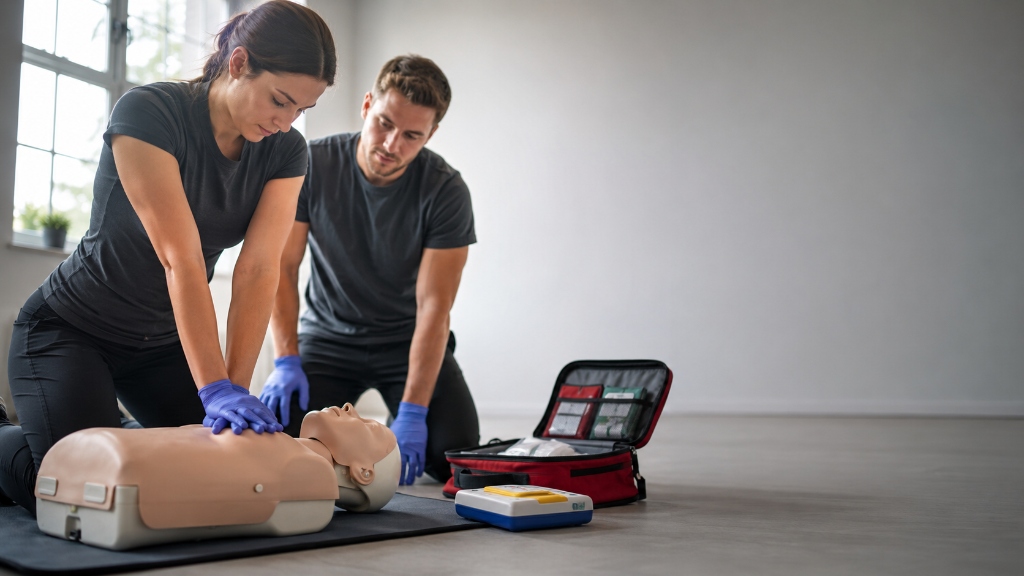
  • Practical infant and child CPR using paediatric training manikins
  • AED awareness and paediatric defibrillator practice
  • Infant and child choking management scenarios
  • Paediatric illness and injury scenario practice
  • Group discussion, practical assessment
  • Multiple-choice theory assessment of CPR and first aid skills

Learners should wear comfortable clothing suitable for practical floor-based activity including CPR, recovery position and casualty management practice. PFA enquiries are welcome from nurseries, childminders, schools, holiday clubs, sports clubs, childcare providers and children’s organisations across East Yorkshire and the Yorkshire coast, including Bridlington, Filey, Scarborough and Whitby.
PFA may be a good fit for

  • Nurseries and early years settings
  • Childminders and registered assistants
  • School staff working with younger children
  • Wraparound childcare and holiday club providers
  • Sports clubs and children’s activity providers
  • Staff who may need to meet EYFS / Ofsted full PFA requirements
  • Organisations wanting broader infant and child first aid training than EPFA

EPFA may be more suitable where

  • An emergency paediatric qualification is appropriate for the role and setting
  • Statutory, insurance and employer requirements allow a one-day EPFA
View Emergency Paediatric First Aid (EPFA) →

Book Paediatric First Aid for your setting

Get in touch to arrange Paediatric First Aid training. Tell us your setting type, number of learners, preferred dates, whether you need on-site delivery, and whether staff require full PFA for EYFS / Ofsted arrangements.