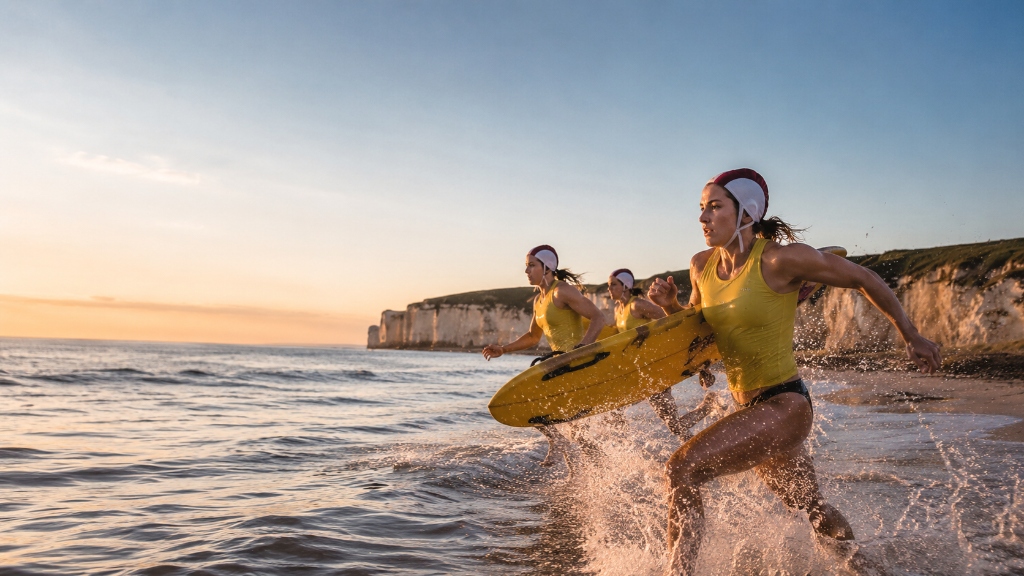
Lifesaving sport gives confident swimmers a practical and purposeful way to use their swimming ability — through rescue skills, water safety, teamwork, fitness and competition. At Yorkshire Lifeguard Academy, it sits alongside swimming lessons and clubs as a next-step pathway, not a replacement for them.
Lifesaving sport is the competitive discipline of aquatic lifesaving. It combines swimming ability, rescue technique, teamwork, fitness and judgement across pool and beach events. Internationally recognised through lifesaving bodies, it is the only sport whose skills are first learned for humanitarian purposes. Every technique and event is rooted in practical lifesaving skills originally developed to save lives.
With events across the pool and on the beach, it challenges competitors in swimming, rescue, fitness and teamwork. At its highest level, it is contested at World Lifesaving Championships and European Championships. At Academy level, lifesaving sport gives young people a reason to train, a team to belong to, practical skills to develop and competition opportunities to work towards.
Lifesaving sport is not a swimming club and does not replace swimming lessons or club swimming. It sits alongside existing providers as a safety-focused progression route for confident swimmers who want something practical, purposeful and team-based. Yorkshire Lifeguard Academy develops lifesaving sport through the RLSS route, especially pool-based lifesaving sport and Academy skill development. East Riding Surf Life Saving Club is the connected SLSGB route for surf lifesaving sport, beach competition and coastal club activity.
Who lifesaving sport is for
Lifesaving sport is for confident swimmers and Academy members who enjoy practical skills, teamwork, fitness and challenge. It is especially suitable for young people who want something more purposeful than lane swimming alone, whether they are completely new to competition or already have a swimming, lifesaving or surf lifesaving background. Young people do not need to see themselves as competitive athletes to benefit — lifesaving sport can support confidence, fitness, teamwork and skill development, with competition introduced progressively where suitable.
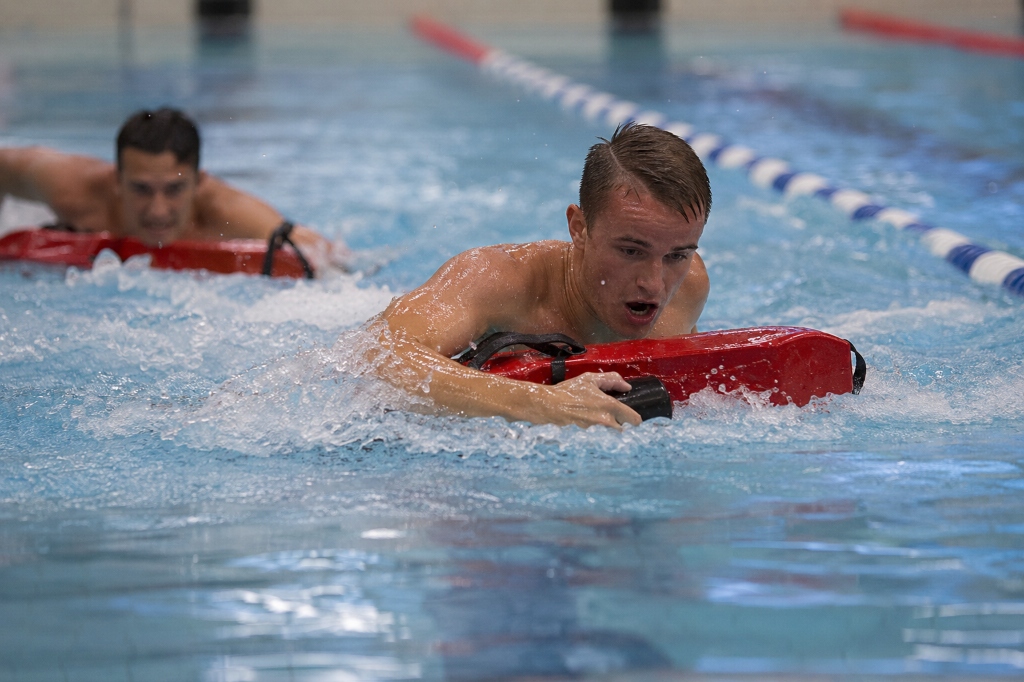
Pool lifesaving sport events combine swimming speed with rescue technique — requiring strength, stamina and technical precision.
Swim a set distance, dive to retrieve a submerged manikin, and carry it to the finish. Tests breath-holding, diving technique and swimming power under load.
A technical pool event combining swimming, underwater work and manikin rescue skills. It tests speed, breath control, rescue technique and composure across multiple disciplines within a single race.
Swim a distance navigating over and under a series of obstacles in the pool. A test of swimming fitness, agility and the ability to maintain speed through physical disruption.
Swim with a rescue tube, simulate a rescue at a designated point, and return to the finish. Develops the rescue tube skills that are central to pool lifeguard practice.
Accuracy and technique event — throwing a rescue line to reach a simulated casualty at a target distance. Requires technique, composure and consistent accuracy under pressure.
Team relay events combining swimming and rescue techniques. Builds team chemistry, communication and the ability to perform under collective pressure at competition.
Coastal lifesaving sport introduces beach and surf lifesaving disciplines — including open-water swimming, board racing, beach sprints and team rescue events. The Yorkshire coast gives the pathway its coastal identity and future competition focus.
Swim out through the surf to a buoy and back — a direct test of open water swimming ability, surf entry and exit, and physical endurance in coastal conditions.
Paddle a rescue board around a course. Requires board handling skill, paddling technique, fitness and the ability to read surf conditions and choose efficient lines through the water.
Sprint down the beach, swim through the surf to a buoy, return and sprint back. A beach multi-discipline event that rewards all-round beach fitness, speed and surf confidence.
Team event — one athlete swims out wearing a belt line, simulates a rescue and is reeled back in by a teammate on the beach. Demands swim strength, teamwork and coordination under pressure.
Sprint from the water's edge to seize a flag from the sand. A reflexes and sprint event that is explosive, intensely competitive — and one of the most crowd-pleasing events in lifesaving sport.
Pure speed on the sand — individual and relay sprint events run on the beach. Accessible to younger athletes and a strong team competition event at all levels of the sport.
Progressive and safety-led. Lifesaving sport skills are introduced progressively through Academy training. Pool, beach and open-water activity will always depend on age, ability, supervision, conditions, safeguarding arrangements, risk assessment and individual readiness. Competition preparation does not override safety, suitability or readiness — training is introduced progressively and matched to the participant and environment.
From Academy training to regional and national competition — here is how the lifesaving sport route develops.
Members develop lifesaving sport skills alongside Rookie Lifeguard and NLA training. Technique, fitness and event preparation are integrated into Academy sessions. Rookie Sport bolt-on awards are available for ages 8–12 alongside the Rookie Pool and Beach programmes — additional RLSS awards recognising lifesaving sport skill development at junior level.
First competition experience through RLSS UK regional pool events and coastal competition days. Entry-level competition for Academy members ready to test themselves, including SERC — the Simulated Emergency Response Championship.
The RLSS UK Pool Lifesaving Championships and national beach events — open to members who have developed through regional events and meet relevant requirements.
World Lifesaving Championships and European Championships — the international stage that athletes may aspire to through national team selection. A long-term aspiration for athletes who continue to develop through the pathway.
At Yorkshire Lifeguard Academy, lifesaving sport is developed through the Academy programme rather than offered as a completely separate club activity. It is part of how Academy members train — built into sessions through the Rookie programmes and the National Lifesaving Academy.
Pool lifesaving sport begins through Rookie Lifeguard Pool and the National Lifesaving Academy. Coastal lifesaving sport interest can develop through Rookie Lifeguard Beach and, in time, through the East Riding Surf Life Saving Club route.
If you want to build swimming fitness specifically for lifesaving sport, the best route is consistent training through the Academy programme. Rookie and NLA sessions are structured to develop the swimming speed, endurance and technique that lifesaving sport demands.
For leisure venues, lifesaving sport can help retain capable young swimmers within the facility — giving them a purposeful route into rescue skills, teamwork, fitness and future lifeguard potential while supporting water safety culture and a distinctive progression route that complements existing swimming provision.
Lifesaving sport gives confident swimmers a reason to keep training while developing practical safety skills, teamwork, discipline, confidence and fitness. It can be a positive route for young people who enjoy swimming but want something more purposeful, varied and skill-based than lane swimming alone.
Parents can expect structured, progressive sessions that build real skills alongside recognised RLSS awards — not simply competition preparation. The social and team element is strong; many young people find lifesaving sport motivating in ways that individual lane training alone does not provide.
Lifesaving sport sits alongside existing swimming lessons or club swimming rather than replacing them. Young people can continue with their current swimming arrangements while adding lifesaving sport as a practical, team-based next step.
Why venues value it
For leisure venues, lifesaving sport helps retain capable young swimmers who might otherwise drift away from pool-based activity after completing swimming lessons or reaching the top of a swim club pathway.
It supports water safety culture, future lifeguard recruitment and a distinctive progression route that complements existing swimming provision — without competing with it.
Venues that support lifesaving sport are helping to develop the next generation of safety-aware, confident aquatic community members — and future lifeguards.
Contact us with the swimmer's age, ability and interests and we will help suggest the right Academy starting point for lifesaving sport development.