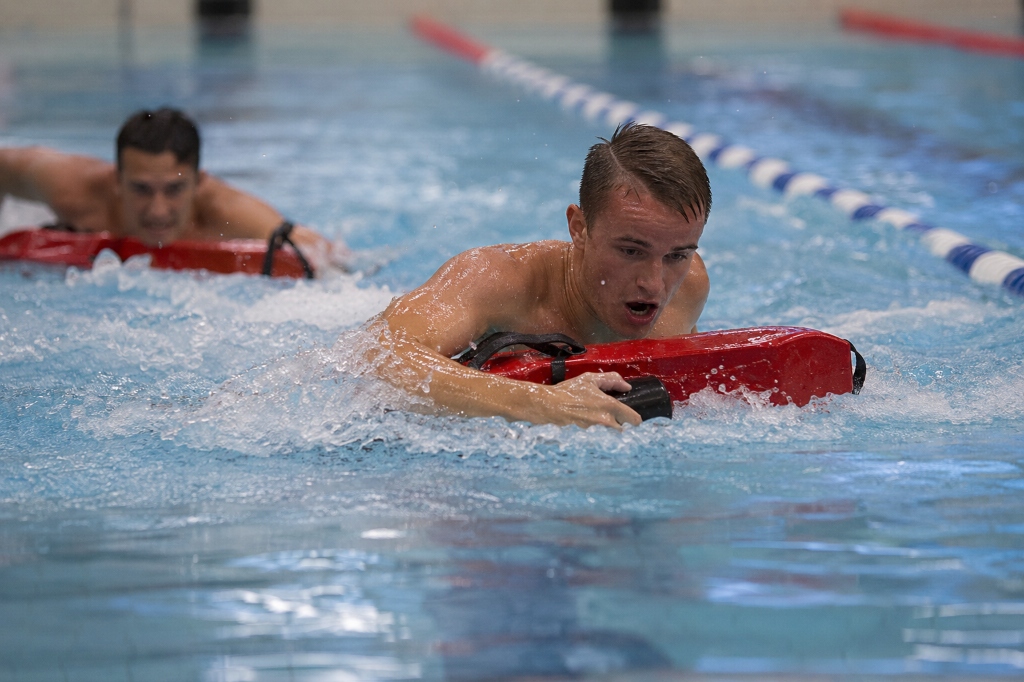
The structured next step after Rookie Lifeguard. A progressive lifesaving development programme for older young people, building practical first aid skills, rescue techniques, swimming fitness, water safety judgement and preparation towards NPLQ, NVBLQ and Open Water Lifeguard (OWL) qualifications.
The National Lifesaving Academy is the central development programme within Yorkshire Lifeguard Academy's RLSS pathway. It builds on Rookie Lifeguard or equivalent experience through practical first aid, progressive rescue techniques, fitness development and multi-environment lifesaving training across pool, open-water and beach strands. SLSGB surf lifesaving, nippers, youth, adults and surf sport sit separately with East Riding Surf Life Saving Club.
The NLA follows three progressive RLSS award levels: Bronze Lifesaving Certificate, Bronze Star and Bronze Medallion. Each level is assessed across three sections: Lifesaving Theory; Lifesaving Survival and Rescue Skills; and CPR, AED and First Aid. Achieving the Bronze Medallion may provide Recognition of Prior Learning (RPL) hours towards NPLQ and NVBLQ, subject to current RLSS requirements, candidate eligibility and the qualification route being followed.
Development, not a professional qualification. The National Lifesaving Academy is a development programme, not a professional lifeguard qualification in itself. It helps young people build the skills, fitness, judgement and confidence that can support later progression into NPLQ, NVBLQ or Open Water Lifeguard when they are old enough and suitable.
NLA members also have access to lifesaving sport — competing in pool and beach events through RLSS UK — giving their training a competitive edge and a team identity.
A progressive curriculum across first aid, rescue, fitness and lifesaving — developing the skills and knowledge required for NPLQ, NVBLQ and Open Water Lifeguard (OWL) entry.
Practical first aid and CPR training including AED use. Progresses from awareness to practical application. Directly supports NPLQ first aid requirements.
Progressive pool rescue skills — active and passive victim rescue, spinal management, rescue tube techniques and emergency action procedures.
Beach and open-water safety principles, coastal awareness, safe decision-making and supervised practical rescue skills. Beach and open-water content is delivered in appropriate conditions with qualified supervision, safeguarding arrangements and risk assessment.
Swimming fitness development to meet the standards required for NPLQ, NVBLQ and Open Water Lifeguard (OWL) entry tests — timed swims, distance swimming and lifesaving fitness.
Pool and beach lifesaving sport events. NLA members train for and compete in RLSS competitions — reinforcing skills, building fitness and competing as a team.
Three progressive RLSS award levels: Bronze Lifesaving Certificate → Bronze Star → Bronze Medallion. Achieving Bronze Medallion may provide RPL hours towards NPLQ and NVBLQ, subject to current RLSS requirements, candidate eligibility and the qualification route being followed.
Age
12 and above. No upper age limit.
Recommended background
RLSS Rookie Lifeguard Pool or Beach is helpful, but not essential. Equivalent swimming ability, water confidence, lifesaving interest or relevant aquatic experience may also be suitable.
Swimming ability
Strong swimming ability is essential. Candidates should be comfortable swimming distance, treading water and working in deep water, and developing towards timed swims and rescue scenarios. Suitability will be discussed before joining.
Commitment
Regular attendance expected. The NLA is a progressive programme — consistency matters.
Suitability and safety. Before confirming a place, we may discuss age, swimming ability, water confidence, maturity and previous experience. Pool, beach and open-water activity will always be shaped by supervision, conditions, risk assessment, safeguarding arrangements and individual readiness.
The NLA is for young people who are ready to take the next serious step in lifesaving. It is more committed than casual aquatic activity, but still welcoming to suitable young people who are motivated to develop practical lifesaving, first aid, rescue and water safety skills.
NLA members typically come from a Rookie Lifeguard background or have equivalent swimming and lifesaving experience. The NLA is not a swimming club and does not replace existing swimming lessons or club swimming — it sits alongside them as a lifesaving, first aid and lifeguard preparation pathway.
For venues, the NLA can provide a structured progression route for strong swimmers who are ready to develop lifesaving, first aid, rescue skills, lifeguard preparation and future workforce capability — helping venues retain capable young swimmers within the facility by giving them a purposeful route into safety, service, sport and future employment.
If you are aged 12 or above, have strong swimming ability and are genuinely interested in lifesaving, the NLA may be the right next step. We will discuss suitability before confirming a place. For parents, the NLA offers a structured, supervised and purposeful next step for strong swimmers who want something more practical than standard swimming activity, while still working alongside existing swimming lessons or club swimming.
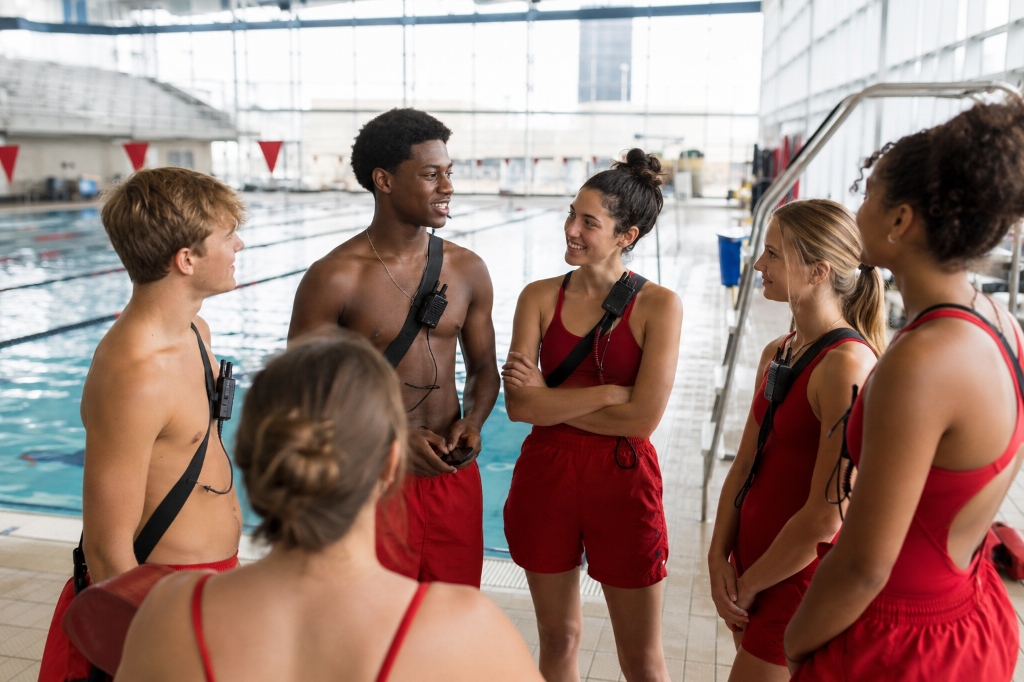
Age
Usually 12 and above. No upper age limit.
Best for
Strong swimmers ready for structured lifesaving development, first aid and qualification preparation.
Environment
Pool, beach and open-water strands where conditions, supervision and risk assessment support safe delivery.
Focus
First aid, CPR, rescue skills, personal survival, fitness, water safety judgement and lifesaving sport.
Progression
NPLQ, NVBLQ, Open Water Lifeguard, lifesaving sport and East Riding Surf Life Saving Club routes.
Suitability
Discussed before joining. No candidate is expected to take part in activity beyond their readiness.
Practical lifesaving, first aid and qualification preparation.
National Pool Lifeguard Qualification. The standard for pool lifeguard roles.
NextNational Vocational Beach Lifeguard Qualification. The standard for beach lifeguard roles.
NextOpen Water Lifeguard Qualification. Lakes, reservoirs, outdoor events.
Sport pathwayRLSS pool and beach lifesaving sport — developing rescue ability, fitness and competition skills alongside the NLA programme.
The NLA is preparation and development. NPLQ, NVBLQ and Open Water Lifeguard (OWL) are the professional lifeguard qualifications. Contact us to discuss the young person's readiness and the right qualification route.
Interested in lifesaving, first aid or lifeguard progression? Not sure whether NLA or Rookie Lifeguard is the right starting point? Contact Yorkshire Lifeguard Academy with the young person's age, swimming ability and previous experience and we will help advise on the most suitable route.