The National Vocational Beach Lifeguard Qualification is a recognised route into beach lifeguarding. It develops the knowledge, fitness and practical skills required for beach and coastal lifeguard environments, including surf awareness, beach patrol, coastal risk assessment, rescue skills, first aid and emergency response.
The National Vocational Beach Lifeguard Qualification is a recognised beach lifeguard qualification used by coastal employers, local authorities, holiday parks, outdoor activity operators and beach venues for lifeguard roles across the UK — including on the Yorkshire coast at Bridlington, Filey, Scarborough and Whitby.
The NVBLQ covers surf rescue, beach surveillance, coastal risk assessment, first aid, spinal injury management and emergency response across four broad module areas: beach lifeguarding knowledge and understanding; life support and first aid; ocean skills; and pool skills. It is different from pool lifeguard training because it prepares candidates for dynamic beach and surf environments, where conditions, visibility, currents, public behaviour and emergency coordination can change quickly.
Holding NVBLQ can support a route into beach lifeguard employment, but individual employers may set additional recruitment, fitness, medical, DBS, induction or local operating requirements. Candidates should always check the requirements of the employer or venue they want to work for.
NVBLQ training is physically demanding and safety-critical. Course delivery, assessment preparation and sea-based activity must be shaped by current RLSS UK standards, candidate readiness, weather and sea conditions, risk assessment, supervision and appropriate safety arrangements. Sea-based activity should never be treated as guaranteed — it must always depend on conditions, supervision, risk assessment, safety cover and candidate readiness. Contact us to discuss NVBLQ course opportunities, entry requirements and preparation through Yorkshire Lifeguard Academy.
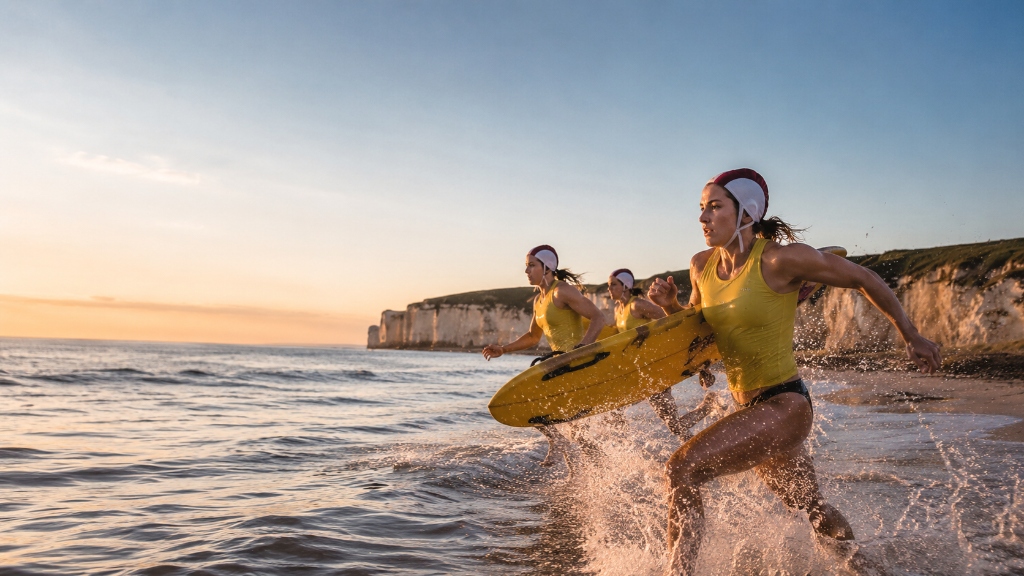
NVBLQ is for strong swimmers aged 16+ who want to work as beach lifeguards or develop professional beach rescue capability. It is suitable for candidates interested in seasonal beach lifeguard roles, holiday park beach safety, coastal activity venues, surf lifesaving, outdoor education and wider coastal safety work.
Aged 16+ with strong swimming ability, sea confidence and physical fitness who want a recognised beach lifeguard qualification and a route into employment at coastal venues, holiday parks, local authorities and outdoor activity providers.
For coastal venues, holiday parks, local authorities and activity providers, NVBLQ training can support recruitment, seasonal readiness, staff development and a stronger beach safety workforce across the Yorkshire coast. Any course hosting conversation should consider candidate numbers, suitable facilities, sea access, safety cover, equipment, weather and sea conditions, emergency procedures, risk assessment and assessment requirements.
Yorkshire Lifeguard Academy's RLSS pathway — including Rookie Beach, the National Lifesaving Academy and lifeguard preparation — can help develop open-water confidence, swim fitness, rescue awareness and coastal understanding as preparation for NVBLQ. East Riding Surf Life Saving Club's Graduate Lifeguard Programme is the connected SLSGB youth surf lifesaving route and may also support future beach lifeguard readiness.
A demanding qualification covering the physical skills, environmental knowledge and emergency procedures relevant to beach lifeguard environments. The summary below gives the key areas candidates should expect — current RLSS UK guidance should always be checked before booking.
Swim rescue in surf conditions — entry and exit through surf, rescue board techniques, victim approach and tow, and management of casualties at the water's edge in wave conditions.
Professional beach patrol procedures, beach flagging systems, sector coverage, prevention messaging and the surveillance skills needed to monitor a large coastal environment.
Reading conditions — tides, rip currents, beach gradients, surf height and weather — and making operational decisions about beach status, safe bathing zones and public communication.
In-water spinal stabilisation, supervised extraction and management of suspected spinal injuries at the beach — including multi-person coordinated extraction techniques.
Full first aid to RLSS UK standards, including AED use, management of near-drowning casualties, hypothermia, trauma and resuscitation in a beach environment.
Understanding communication, scene management and handover during beach incidents involving services such as RNLI, HM Coastguard, ambulance and police — and the lifeguard's role within that wider response.
NVBLQ is physically demanding and should only be attempted by candidates with strong swimming ability, sea confidence and good fitness. Candidates need to be comfortable in dynamic coastal environments and ready for timed swims, surf skills, rescue techniques, first aid, CPR, casualty management and assessment.
NVBLQ courses are usually at least 40 hours, followed by assessment. Course format, venue arrangements and assessment details may vary, so current RLSS UK guidance should always be checked before booking.
You may be ready for NVBLQ if you:
If you are not ready yet, Yorkshire Lifeguard Academy can advise on preparation through Rookie Beach, the National Lifesaving Academy, lifesaving sport, sea confidence and fitness development.
Awarding body
RLSS UK — Royal Life Saving Society UK
Minimum age
16 years old at time of final assessment
Environment
Beach and surf — coastal conditions
NVBLQ prerequisites
Candidates must be able to:
Always verify requirements against the latest RLSS UK guidance before booking.
Course commitment
Usually at least 40 hours, followed by practical assessment. Course format varies by venue, timetable and provider.
Assessment areas
Beach lifeguarding knowledge and understanding; life support and first aid; ocean skills; pool skills.
Validity
Usually time-limited; check current RLSS UK guidance when booking, renewing or using the qualification for employment.
Employment
Used by local authorities, holiday parks, outdoor activity operators and coastal venues. Individual employers may set additional fitness, medical, DBS, induction or role-specific requirements.
The SLSGB Graduate Lifeguard Programme for 13–18 year olds — a structured three-year pathway preparing for NVBLQ and formal lifeguard qualifications.
View the programme → 🌊Also interested in open water venues — lakes, rivers and reservoirs? The Open Water Lifeguard (OWL) qualification covers non-tidal open water environments.
View OWL → 🏅If you need pool lifeguard qualification as well as beach, the NPLQ is the recognised standard for pool environments.
View NPLQ →NVBLQ is a recognised professional beach lifeguard qualification, but it does not automatically guarantee employment. Employers may require additional fitness tests, medical checks, DBS checks, induction, local training, relevant experience, interview performance and role-specific standards.
Candidates should always check the requirements of the employer or venue they want to work for — particularly for RNLI lifeguard roles, local authority seasonal contracts, holiday park lifeguard positions and coastal activity operators, each of which may have their own criteria.
NVBLQ enquiries are welcome from candidates, coastal venues, holiday parks and employers across the Yorkshire coast, including Whitby, Scarborough, Filey and Bridlington.
For coastal venues and employers
Yorkshire Lifeguard Academy can discuss NVBLQ preparation, course hosting, staff development and future beach lifeguard workforce planning with coastal venues, holiday parks, local authorities, outdoor activity providers and beach operators.
Any course or preparation activity would need suitable venue arrangements, equipment, supervision, safety procedures, sea-condition planning, risk assessment, candidate suitability and RLSS requirements in place.
Contact us to discuss whether a venue-hosted course, preparation route or employer conversation is realistic and suitable for your setting.
Delivered through Bluewatch Training
NVBLQ sits within the Yorkshire Lifeguard Academy pathway. Formal RLSS course delivery, administration and quality assurance are provided through Bluewatch Training, the professional training arm of Yorkshire Lifeguards.
To enquire about NVBLQ — as a candidate, coastal venue or employer — contact us and we will discuss entry requirements, preparation and course opportunities.
If you are a candidate, tell us about your age, swimming fitness, sea confidence and previous lifesaving experience. If you are a venue or employer, contact us to discuss staff training, course hosting or future beach lifeguard workforce development across the Yorkshire coast.