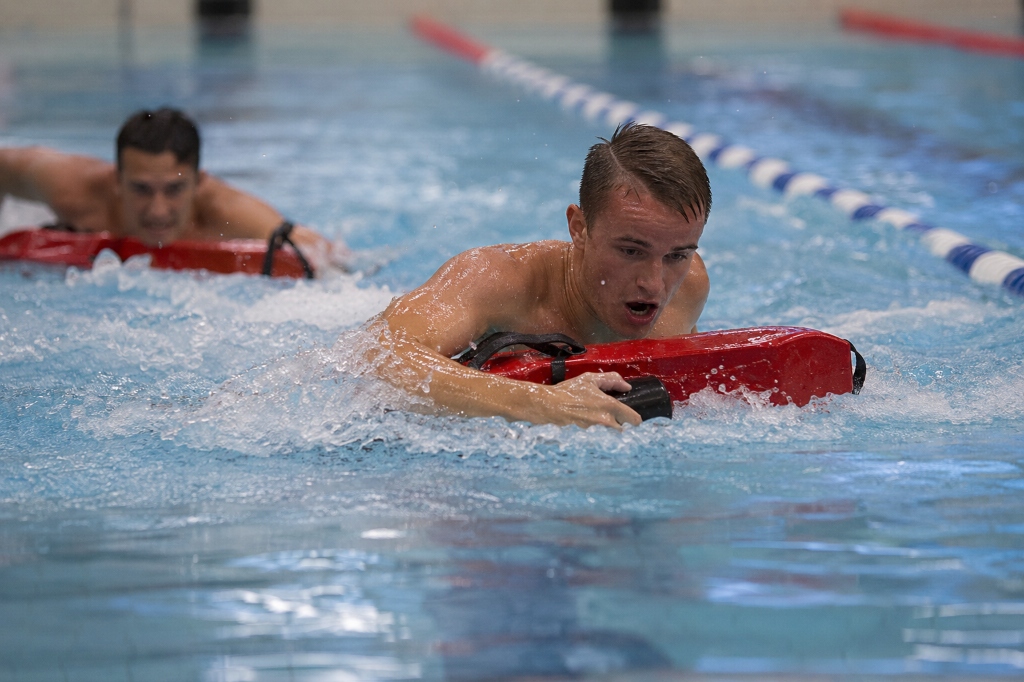
The National Pool Lifeguard Qualification is the recognised standard for pool lifeguarding in the UK. It is widely used by leisure centres, schools, holiday parks, hotels and aquatic venues for pool lifeguard roles. Yorkshire Lifeguard Academy offers NPLQ training and preparation for candidates developing pool lifeguarding, CPR, AED, rescue skills, scanning, supervision and emergency response capability.
The National Pool Lifeguard Qualification is the RLSS UK pool lifeguard qualification widely used by leisure trusts, local authorities, private leisure operators, universities, hotels and aquatic venues. Many leisure centres, schools, holiday parks, hotels and aquatic venues require a recognised pool lifeguard qualification such as NPLQ for lifeguard roles.
NPLQ is widely accepted across the UK as the standard route to pool lifeguard employment — making it relevant for candidates seeking work across the leisure, education and hospitality sectors. NPLQ enquiries are welcome from candidates, venues and employers across the Yorkshire coast, including Whitby, Scarborough, Filey and Bridlington.
At Yorkshire Lifeguard Academy, the NPLQ sits at the professional end of the Academy pathway — after Rookie Lifeguard, National Lifesaving Academy and lifeguard preparation. Contact us to discuss NPLQ course opportunities, entry requirements and preparation through Yorkshire Lifeguard Academy.
NPLQ is a professional qualification with physical, practical and theoretical assessment. Candidates should be prepared for a demanding course that requires fitness, maturity, regular attendance, active participation and assessment readiness.
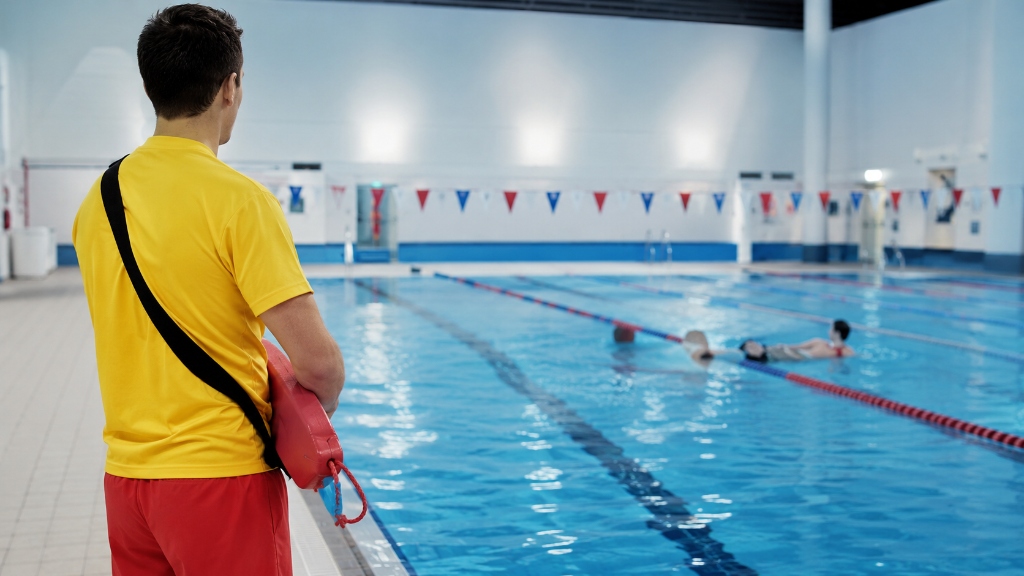
NPLQ is for candidates aged 16+ who want to work as pool lifeguards in leisure centres, schools, holiday parks, hotels, pools and aquatic venues. It is also suitable for strong swimmers who want a recognised professional qualification and a practical route into employment in the leisure and aquatic sector.
Aged 16+ with strong swimming ability who want a professional pool lifeguard qualification and a route into employment at leisure centres, aquatic venues, holiday parks, schools and pools across the UK.
Yorkshire Lifeguard Academy can work with venues and employers to discuss NPLQ course hosting, candidate preparation, staff training needs and future pool lifeguard workforce development across the Yorkshire coast. Any course would depend on suitable venue arrangements, pool depth, equipment, safety procedures, classroom space, timetable, candidate numbers and RLSS requirements — helping venues build a stronger local pipeline of trained lifeguards.
The Academy pathway — through Rookie Lifeguard and the National Lifesaving Academy — builds the swimming fitness, rescue awareness, water safety knowledge and professional readiness that candidates need for NPLQ entry and successful completion.
A comprehensive programme covering every aspect of pool lifeguard duty — surveillance, rescue, first aid and emergency management.
Systematic surveillance techniques, scanning patterns, distress recognition and the vigilance required to identify a bather in difficulty before an emergency develops.
How to activate and execute a pool emergency action plan — clearance procedures, team coordination, communication with emergency services and post-incident management.
Active and passive victim rescue at the surface and submerged, rescue tube technique, entry and exit techniques, and multi-lifeguard rescue procedures.
Full first aid and CPR training to RLSS UK standards, including AED use, recovery position, management of near-drowning casualties and basic life support.
Recognition and management of suspected spinal injury in a pool environment — in-water stabilisation and safe extraction procedures.
The legal and professional responsibilities of a pool lifeguard — duty of care, reporting, record keeping, pool rules enforcement and professional conduct.
The NPLQ has swimming and fitness entry requirements set by RLSS UK. Candidates must be 16 years old or above at the time of final assessment and must be able to meet the required swimming, deep-water and self-rescue standards before starting the course.
NPLQ courses usually require a minimum of 36 hours of training, 100% attendance and a final assessment. Course format may vary by venue, timetable and provider requirements.
You may be ready for NPLQ if you:
If you are not ready yet, Yorkshire Lifeguard Academy can advise on preparation through swimming fitness, lifesaving skills and Academy progression.
Awarding body
RLSS UK — Royal Life Saving Society UK
Minimum age
16 years old at time of final assessment
NPLQ entry requirements
Candidates must be able to:
Always verify requirements against the latest RLSS UK guidance before booking.
Training commitment
Usually a minimum of 36 hours of training, with 100% attendance required. Course format varies by venue, timetable and provider.
Validity
NPLQ is normally valid for two years and must be renewed within the validity period in line with current RLSS UK requirements. Candidates should check the latest RLSS UK guidance when booking, renewing or using the qualification for employment.
Employment
Accepted by leisure operators, leisure trusts and aquatic venues across the UK.
National Pool Lifeguard Qualification — the recognised standard for pool lifeguard roles.
National Vocational Beach Lifeguard Qualification — the standard for beach lifeguard roles.
RelatedOpen Water Lifeguard Qualification. Lakes, reservoirs, events.
PreparationThe development programme that prepares candidates for the NPLQ.
Delivered through Bluewatch Training
NPLQ sits within the Yorkshire Lifeguard Academy pathway. Formal RLSS course delivery, administration and quality assurance are provided through Bluewatch Training, the professional training arm of Yorkshire Lifeguards.
To enquire about NPLQ — as a candidate, venue or employer — contact us and we will discuss entry requirements, preparation and course opportunities.
Yorkshire Lifeguard Academy can discuss NPLQ delivery, staff training needs, candidate preparation, venue-hosted courses and local lifeguard workforce development. This may be useful for leisure centres, schools, holiday parks, hotels and aquatic venues that want to develop a stronger local pipeline of qualified pool lifeguards.
Any course would need suitable facilities — including appropriate pool depth and size, classroom or dry-side space, safety equipment, emergency procedures, risk assessment, course timetable and minimum candidate numbers. Yorkshire Lifeguard Academy can help assess whether a venue-hosted course or alternative arrangement is realistic and suitable.
NPLQ training and assessment must be delivered in suitable facilities, with appropriate supervision, equipment, risk assessment, emergency procedures and RLSS requirements in place. Candidates must also be able to meet the physical and practical demands of the course before training begins.
What happens after you enquire?
After you contact us, we can discuss your age, swimming ability, current experience, preferred venue or location, availability and whether you are looking for a full NPLQ course, preparation support or an employer and venue conversation.
For candidates: we will help identify whether your current ability meets the entry requirements and what the most appropriate next step looks like.
For venues and employers: we will discuss course hosting suitability, candidate pipeline, scheduling options and how Yorkshire Lifeguard Academy can support your workforce development.
Candidates can contact us about entry requirements, preparation and future NPLQ course opportunities. Venues and employers can contact us about staff training, course hosting and local lifeguard workforce development across the Yorkshire coast.