First Aid at Work training
Bluewatch Training · RLSS UK · 3 Days

First Aid at Work
(FAW).

Three days. Level 3. The full workplace first aid qualification for settings that need more than EFAW. First Aid at Work is commonly suitable for higher-risk workplaces, larger teams, public-facing organisations, leisure settings and workplaces where the first-aid needs assessment identifies a requirement for fully qualified first aiders.

RLSS UK · Level 3
Ofqual Regulated
Supports HSE / HSENI Requirements
3 Days · Valid 3 Years
What is FAW?

Comprehensive workplace first aid for higher-risk settings.

The First Aid at Work (FAW) course is the full workplace first aid qualification for settings that need more than EFAW. It covers a wide range of CPR and first aid skills and equips first aiders with the knowledge to apply first aid to specific injuries and illnesses — going well beyond the emergency-only EFAW content.

After completing the RLSS UK FAW course, candidates receive an Ofqual-regulated Level 3 First Aid at Work qualification valid for 3 years.

FAW can be suitable across a wide range of industries and sectors where the employer’s first-aid needs assessment identifies the need for fully qualified first aiders. It supports workplace first aid provision in line with HSE and HSENI requirements when selected appropriately for the organisation’s risks, workforce and setting.

RLSS UK’s First Aid at Work training is CIMSPA endorsed and regulated by Ofqual, Qualifications Wales and CCEA in Northern Ireland.
Course overview

Duration

3 days — normally 18 hours of face-to-face course time, delivered over three consecutive days or, where available, split into smaller sessions in line with current RLSS UK requirements

Qualification

Level 3 First Aid at Work (RLSS UK)

Regulation

Ofqual regulated (also accredited by Qualifications Wales and CCEA in Northern Ireland). Designed to support HSE / HSENI workplace first aid requirements.

Validity

3 years from assessment. Requalification required before expiry. A shorter FAW requalification route may be available where current guidance and candidate eligibility allow.

Delivery

At your premises or an agreed venue.

Minimum age

16 years old at time of assessment.

Enquire about this course
What you learn

Course content

FAW builds on EFAW content and extends to a full range of injuries, illnesses and emergency scenarios that a first aider may encounter in the workplace.

Emergency first aid (all EFAW content)

Scene safety, primary survey, CPR, AED use, choking, wounds and bleeding, shock response, recovery position.

Secondary Survey

Head-to-toe casualty assessment — identifying injuries not immediately obvious in the primary survey and monitoring for deterioration.

Head & Spinal Injuries

Recognition and management of head injuries, suspected spinal injury and the considerations for safe casualty management to avoid further harm.

Fractures & Dislocations

Recognition and first aid management of fractures, including open and closed fractures, dislocations and associated soft tissue injuries.

Burns & Scalds

Classification and first aid treatment of burns by depth, cause and extent — cooling, covering and managing the casualty safely.

Medical Emergencies

Recognition and response to heart attack, stroke, epilepsy, diabetes emergencies, anaphylaxis and respiratory conditions in the workplace.

Eye Injuries & Poisons

First aid for foreign objects and chemical injuries to the eye, and recognition and management of poisoning incidents in the workplace.

Record Keeping

The first aider’s responsibilities regarding accident reporting and record keeping — incident logs, handover information for emergency services and awareness of RIDDOR reporting obligations where relevant to the first aider’s role.

Not sure whether FAW is required?

Employers decide provision based on their needs assessment.

Employers should choose first aid training based on their first-aid needs assessment, considering workplace hazards, number of employees, shift patterns, location, visitors, lone working, public access and the type of work carried out.

FAW is often appropriate where risks are higher, workforces are larger, or first aiders may need to manage a wider range of injuries and illnesses. Bluewatch Training can help discuss suitable options, but employers remain responsible for deciding the level of first aid provision required for their organisation.

Discuss FAW for your organisation
FAW or EFAW?

Choosing the right course.

EFAW — 1 Day

One-day emergency first aid course often suitable for lower-risk settings where the needs assessment identifies a requirement for emergency first aid cover.

FAW — 3 Days

Three-day course for workplaces where the needs assessment identifies a requirement for broader first aid knowledge, including secondary survey, fractures, burns, head injuries, spinal concerns and medical emergencies.

View EFAW course →
Who it's for

When FAW is commonly the right choice

FAW is commonly appropriate where the first-aid needs assessment identifies a requirement for fully qualified first aiders. Employers should confirm FAW is appropriate for their specific setting.

Higher-risk workplaces

Manufacturing, construction, engineering, warehousing, agriculture and other environments where the first-aid needs assessment indicates the full FAW qualification is appropriate.

Care & health settings

Care, supported living and health-related settings where staff may benefit from broader first aid knowledge alongside organisation-specific procedures, policies and any applicable clinical or safeguarding training requirements.

Leisure & sport

Leisure operators, sports facilities, clubs and venues where larger numbers of people may be present and where the needs assessment identifies a requirement for comprehensive first aider training.

Important for employers

FAW may be suitable for higher-risk workplaces, larger teams, public-facing organisations, leisure settings or workplaces where first aiders may need to manage a wider range of injuries and illnesses. However, employers remain responsible for completing their own first-aid needs assessment and deciding what first aid equipment, facilities and personnel are adequate and appropriate for their workplace.

Bluewatch Training can discuss whether FAW, EFAW, Paediatric First Aid, Outdoor First Aid, AED or Anaphylaxis Management may be suitable, but this does not replace the employer’s own first-aid needs assessment.

FAW course delivery requires suitable space for practical first aid activity, including floor-based CPR and casualty management practice. For organisations hosting training, Bluewatch Training can discuss venue requirements and access needs when enquiring. Learners should contact Bluewatch Training in advance if they have accessibility needs, medical considerations or concerns about taking part in practical elements.

What happens on the course?

Practical, comprehensive and trainer-led.

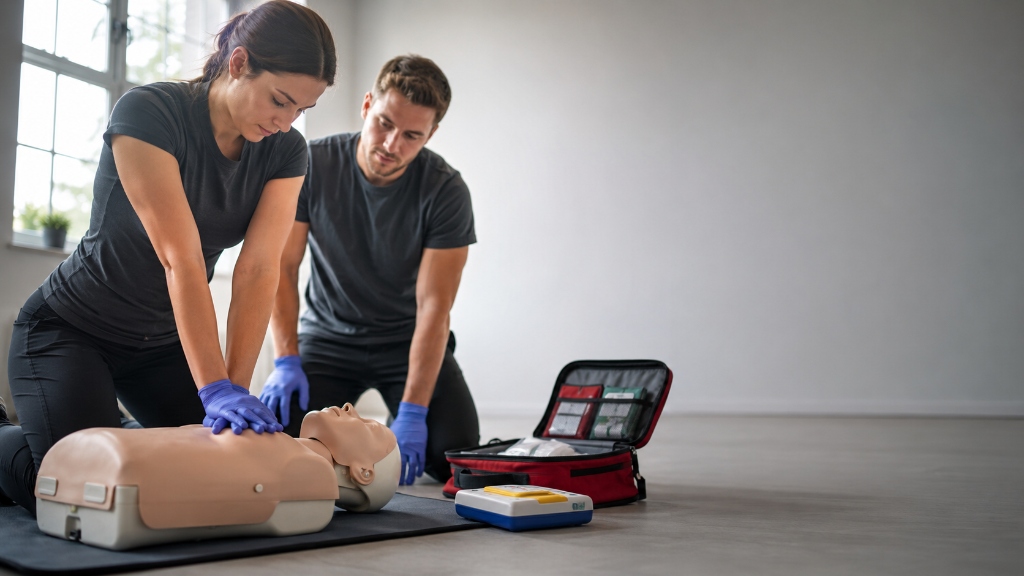
The FAW course is practical and classroom-based across three days. Learners should expect:

  • Trainer-led teaching across all FAW learning outcomes
  • CPR, AED and basic life support practice
  • Secondary survey, casualty assessment and scenario practice
  • First aid for injuries, illnesses and medical emergencies
  • Bandaging, wound management, fracture and burn management
  • Workplace first aider roles, responsibilities and record keeping
  • Assessment against required RLSS UK learning outcomes

Learners should wear comfortable clothing suitable for practical floor-based activity including CPR, recovery position and casualty management practice. FAW enquiries are welcome from employers, leisure venues, care settings, sports facilities, schools, community organisations and larger workplaces across East Yorkshire and the Yorkshire coast, including Bridlington, Filey, Scarborough and Whitby.

FAW may be a good fit for

  • Higher-risk workplaces identified by the needs assessment
  • Larger teams or public-facing organisations
  • Leisure centres, sports facilities and venues
  • Care and supported living settings
  • Construction, manufacturing, engineering, warehousing or agriculture
  • Organisations with shift patterns, lone workers or remote work
  • Settings where the needs assessment identifies fully qualified first aiders

FAW may not be necessary where

  • The workplace is lower-risk and EFAW is identified as sufficient
  • Appointed-person arrangements are identified as appropriate
  • The needs assessment identifies emergency-only first aid as sufficient
View Emergency First Aid at Work (EFAW) →
After qualification

Maintaining your FAW qualification

Combined PFA & FAW

Need both workplace and paediatric first aid? Our 3-day combined course awards both FAW and Paediatric First Aid certificates — two qualifications, one streamlined course.

View Combined PFA & FAW

AED Awareness Add-on

Complement your FAW qualification with a standalone AED awareness session — particularly valuable if your organisation has a defibrillator on-site and wants staff to feel confident using it.

View AED Programme

Arrange First Aid at Work for your team

Get in touch to discuss your workplace type, group size, risk level, preferred venue, timescale and whether you need FAW, EFAW, combined paediatric and workplace first aid, or add-on AED training.